
REST Polling vs WebSockets for Sports Data
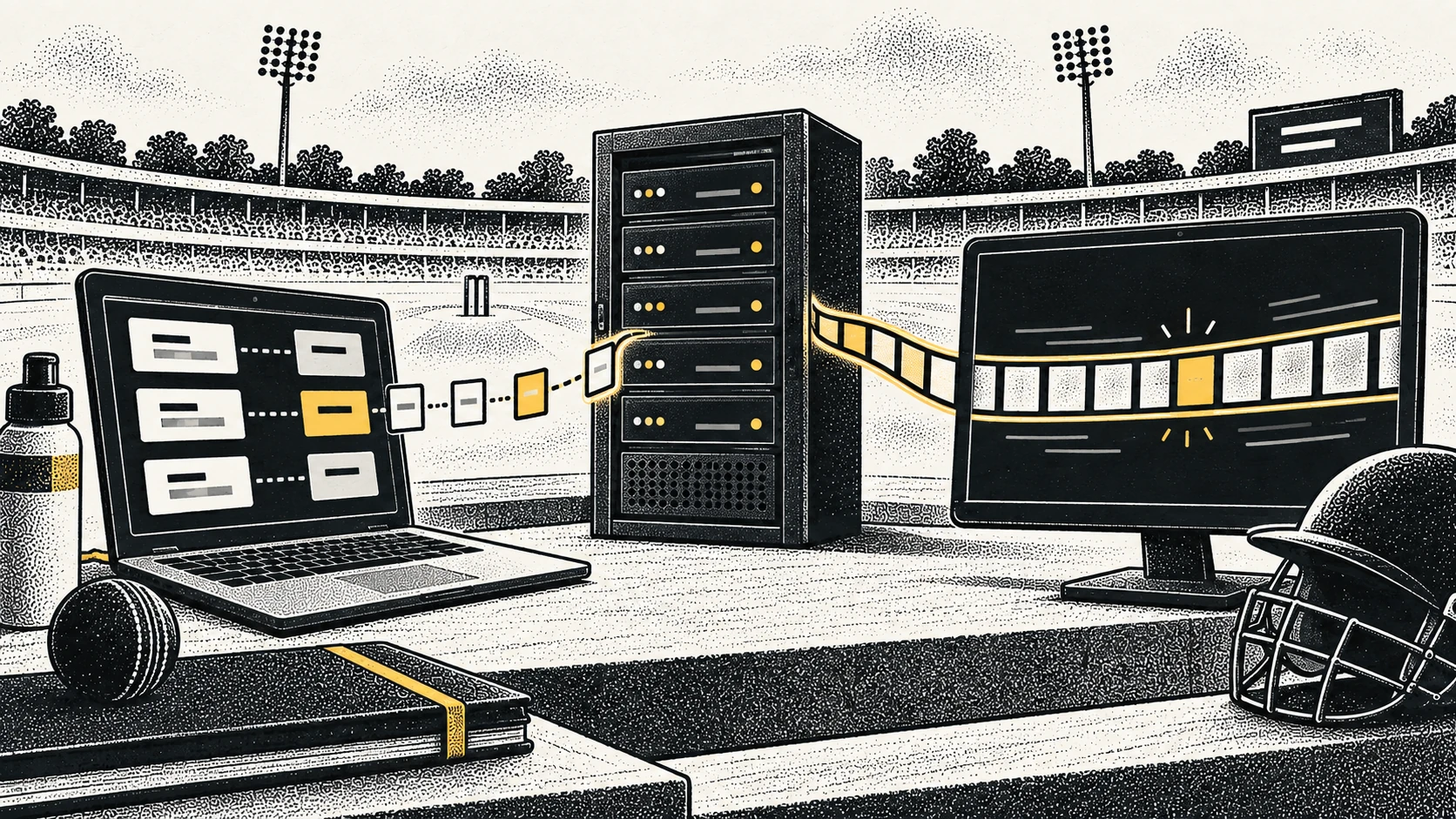
Polling asks for the current data at intervals. A WebSocket maintains a connection through which messages can flow in both directions. The better choice depends on the update contract, operating environment and recovery requirements, not the transport name alone.
The MDN WebSocket reference describes the browser's two-way communication interface. It does not guarantee that a particular sports supplier offers WebSockets or that every message is current.
Compare the operational trade-offs
- Infrequent updates: Polling consideration – Simple scheduled fetch; WebSocket consideration – Persistent connection may add little value
- Frequent changes: Polling consideration – Repeated requests add overhead; WebSocket consideration – Push can avoid repeated unchanged responses
- Recovery: Polling consideration – Fetch a current snapshot; WebSocket consideration – Resume or rebuild state explicitly
- Infrastructure: Polling consideration – Familiar HTTP request handling; WebSocket consideration – Connection lifecycle and fan-out management
These are design considerations, not performance benchmarks. Measure the actual implementation under representative conditions.
Separate upstream from downstream
Your supplier connection and your browser connection do not have to use the same transport. A backend can poll a source and distribute accepted updates to browsers through a persistent connection. It can also consume a stream while exposing a cached HTTP endpoint to occasional visitors.
Keep supplier credentials on the appropriate trusted side of that boundary. A transport decision should not accidentally expose a private upstream key in browser code.
Test recovery before choosing
For polling, define timeouts, retry limits and how stale responses are detected. For WebSockets, test disconnects, duplicate messages, missing sequences and snapshot reconstruction.
A reconnected socket can still have an incomplete local state. A successful poll can still contain old data. Both designs need content-level validation.
Consider a hybrid
A practical pattern is a snapshot for initialization and a stream for subsequent changes, provided the supplier supports a coherent boundary between them. Another is polling stable fixtures while streaming active-event updates.
Do not combine a snapshot and stream casually. Messages arriving during initialization can be lost or applied twice unless the contract defines ordering or a recovery strategy.
Compare the operating obligations
- How does a new client start?: Polling consideration – Retrieve a current response; WebSocket consideration – Obtain initial state before applying updates
- What happens after interruption?: Polling consideration – Retry under the request policy; WebSocket consideration – Reconnect and reconcile missed state
- What controls traffic?: Polling consideration – Interval, endpoint scope and caching; WebSocket consideration – Subscriptions, event volume and fan-out
- What proves freshness?: Polling consideration – Data timestamps and expected activity; WebSocket consideration – Data timestamps and expected activity
The final row matters: transport does not establish freshness. A connected socket can carry old data, and a recent HTTP response can contain an unchanged stale record.
Evaluate a hybrid design
A product may use server-side polling for one upstream source and WebSockets between its own backend and browsers. Another may consume upstream push while exposing cached HTTP reads to visitors. These are valid architectural combinations when their recovery and freshness contracts are explicit.
For a hypothetical match centre, one backend collector can maintain a coherent event state while many readers receive it through the application's chosen delivery method. That separates upstream entitlement and request volume from the number of open browser tabs.
The tradeoff is ownership: the application team now operates the distribution layer and must monitor its lag. Include that layer in end-to-end measurements rather than attributing every delayed screen update to the external supplier. The decision is about the complete path to the user, not which protocol sounds more modern.
Choose with a bounded experiment
Measure request volume, data age, recovery time and implementation effort for the same workload. Include a sleeping mobile tab and a network change, not only a desktop on a stable connection.
Ask which delivery methods are available for the relevant 7 Unicorn Gaming service and confirm them through the contact page. A well-operated polling design can be preferable to an unreliable stream; the evidence should determine the choice.