
A Sports API Trial Scorecard Your Whole Team Can Use
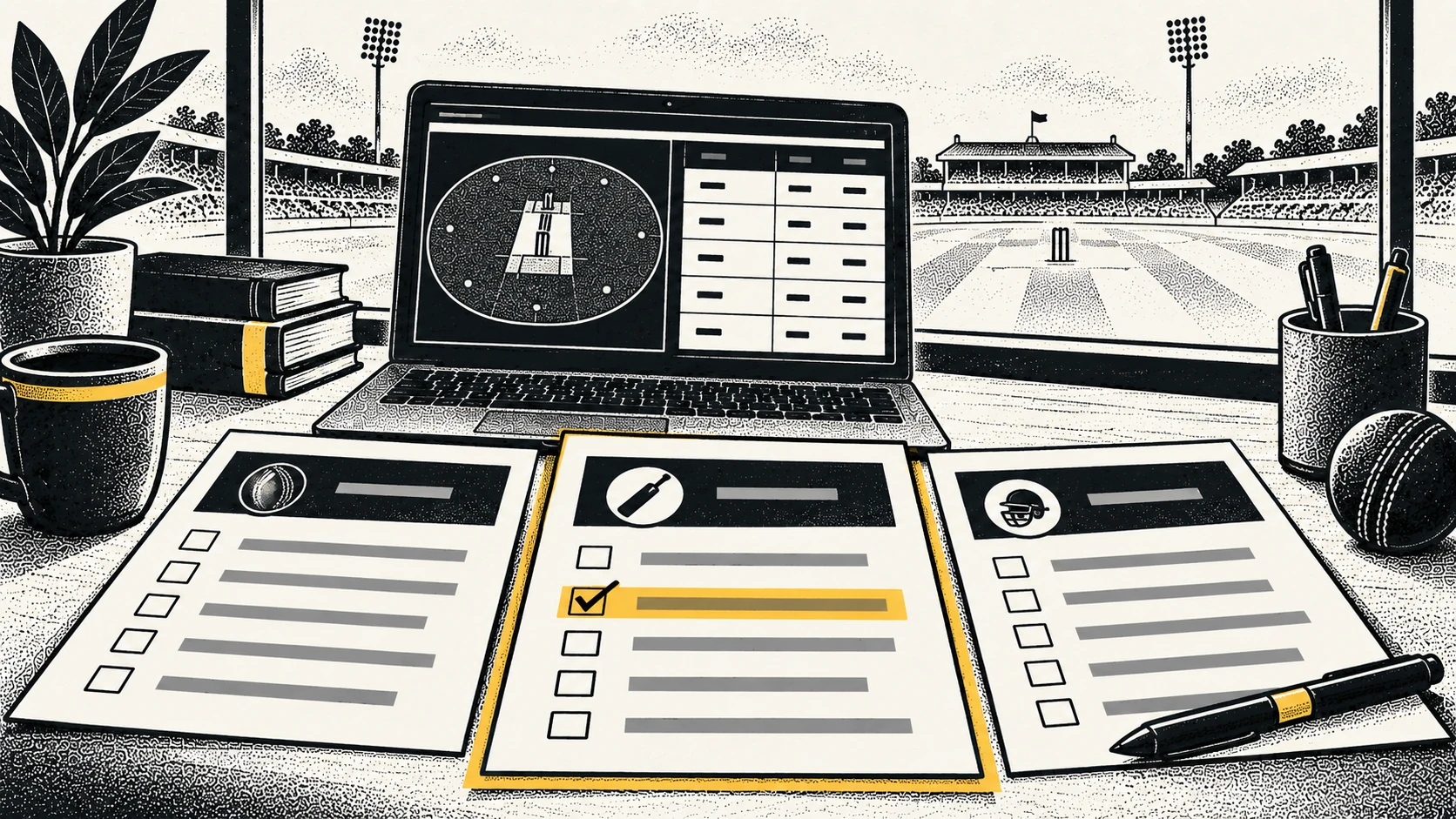
A sports API trial should end with a decision that another person can reproduce. “The demo looked quick” is difficult to audit. A scorecard tied to recorded tests is much stronger.
Use a small number of dimensions, agree their weights before the trial and separate mandatory requirements from preferences. This avoids changing the rules after a preferred supplier performs poorly.
Choose dimensions that match the product
For a hypothetical live match centre, a useful starting allocation is coverage 30%, data correctness 25%, freshness 20%, recovery 15% and developer usability 10%. These are proposed weights, not industry standards.
Each dimension needs a defined test. Coverage can use sampled fixtures; correctness can compare agreed reference records; freshness can use timestamp observations; recovery can use an authorized disconnect test; usability can measure the work required to complete a documented integration task.
Score evidence, not promises
- Coverage: Example score out of five – 4; Weighted contribution – 24
- Correctness: Example score out of five – 5; Weighted contribution – 25
- Freshness: Example score out of five – 3; Weighted contribution – 12
- Recovery: Example score out of five – 4; Weighted contribution – 12
- Developer usability: Example score out of five – 4; Weighted contribution – 8
- Total: Example score out of five – Hypothetical trial; Weighted contribution – 81/100
The calculation is weight × score ÷ 5. Keep the underlying observations beside every score. Without them, the table becomes a dressed-up opinion.
Use “unverified” rather than an average score when a test could not run. A missing observation is not evidence of mediocre or excellent performance.
Add gates the total cannot override
Some failures should stop a launch regardless of the aggregate score. Examples include unresolved rights for the intended use, an inability to identify records consistently, or a correction workflow that silently loses history.
Define the gates around your requirements. A read-only statistics page and a live operational interface can reasonably set different thresholds. What matters is explaining why each gate exists.
Run the whole event lifecycle
Test before, during and after an event. Check that scheduled records become live records without losing identity. Observe a reconnect and verify the current state. Inspect the final result and, where available, a correction replay.
Avoid treating a quiet period as a load test. Record traffic conditions, event count, collector location and the trial date. Those details limit the conclusions honestly.
Write the scoring rubric before collecting results
A five-point scale needs anchors. One proposed rubric gives a score of five when the agreed test passes without a material exception, three when the required behavior works with an accepted limitation, and one when the requirement is substantially unmet. Intermediate scores need similarly written definitions if the team uses them.
This is a proposed review method, not a standardized certification. The important point is that two reviewers should understand why the same evidence received the same score. Where they disagree, preserve the reason rather than averaging the disagreement away.
Keep an evidence row for every test
- Test reference: Example content – T04: reconnect during an active event
- Requirement: Example content – Restore a coherent current score
- Input: Example content – Authorized event fixture and disconnect sequence
- Observation: Example content – Current state restored; one historical update unavailable
- Decision: Example content – Current display passes; history requirement remains open
The example demonstrates why a single green tick can be misleading. Recovery of the current screen and completeness of the historical record are different outcomes. The product may need both, or it may explicitly accept one.
Store the contract version and trial conditions with the evidence. If the supplier changes the integration before launch, the team can identify which cases need another run. There is no need to repeat unrelated tests merely to increase the size of the report; rerun the cases whose assumptions changed.
Record the decision and the remaining work
The decision can be proceed, proceed with named conditions, extend the trial or reject for the current scope. Every condition needs an owner and evidence that will close it.
7 Unicorn Gaming's live data page can support initial inspection. Its API usage guide provides another starting point for the developer-usability test. Neither replaces an agreed trial covering your specific use case.
Keep the scorecard after launch. Reusing it at renewal reveals whether the service still fits the product or whether growth has changed the requirements.